
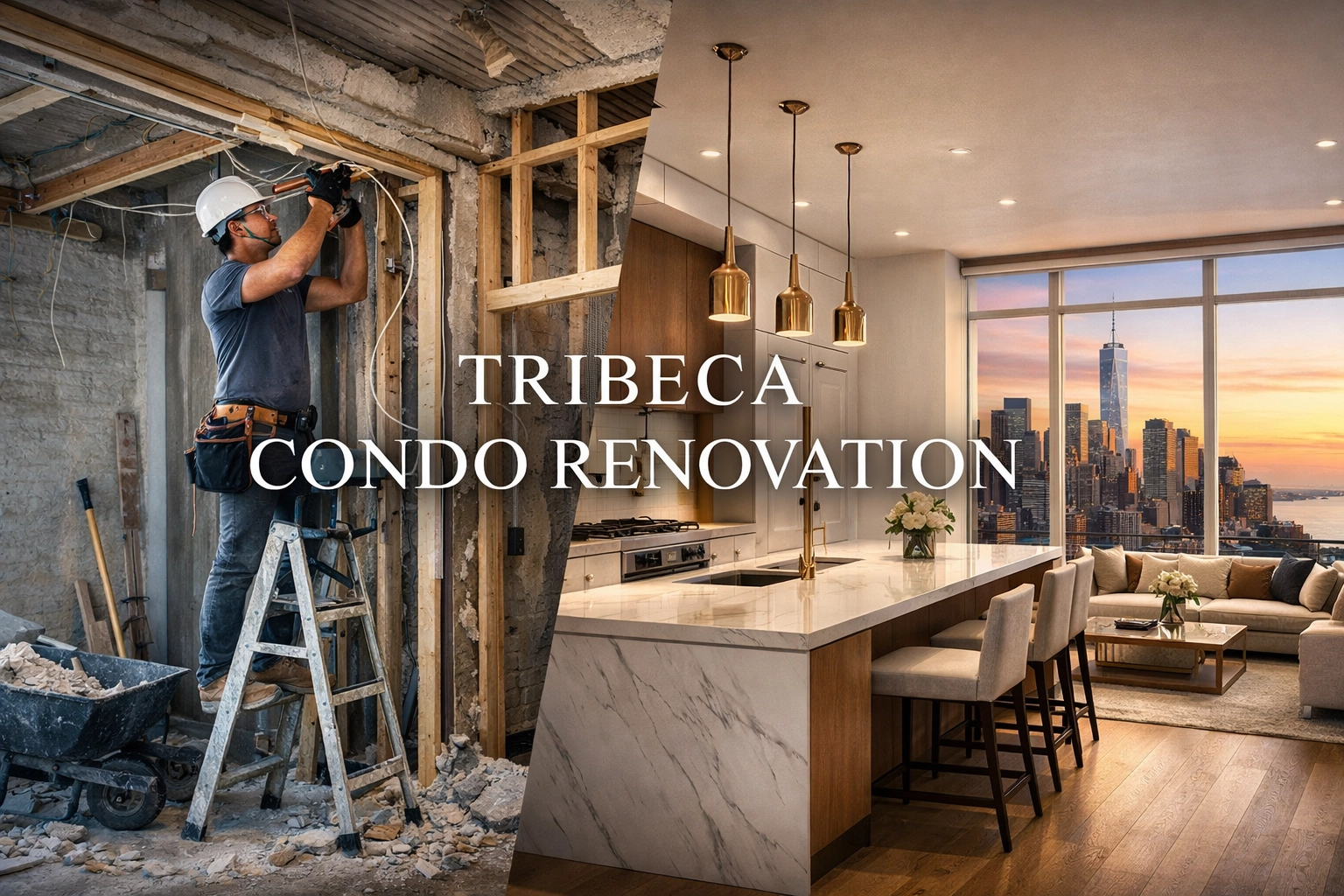
Tribeca condo renovation projects transform historic industrial lofts and luxury high-rises into bespoke modern residences. Navigating this complex process requires an expert understanding of high-end material costs, strict condo board alteration agreements, and NYC Department of Buildings (DOB) permit requirements. Corniel Construction LLC provides the technical expertise and project management necessary to execute these high-stakes Manhattan transformations.
Who This Page Is For
This guide is designed for Tribeca property owners planning a full-scale remodel, prospective buyers evaluating a "fixer-upper" loft, and design professionals, including architects and designers, seeking a technical planning partner. Whether you are updating a modern glass-walled condo or gutting a historic cast-iron loft, this resource outlines the financial, regulatory, and logistical realities of renovating in one of Manhattan’s most exclusive neighborhoods.
The Cost of a Tribeca Condo Renovation
Renovating a condo in Tribeca is a significant investment, often commanding some of the highest price points in the New York City market due to the scale of the spaces and the level of finishes expected. On average, a Tribeca condo renovation costs between $400 and $800+ per square foot.
Budget Breakdown by Scope
- Cosmetic Updates ($150–$250 per sq. ft.): This includes "surface-level" changes such as refinishing floors, painting, updating lighting fixtures, and minor cabinetry refreshes. These projects typically do not require moving walls or plumbing.
- Mid-Range Full Gut Renovation ($400–$600 per sq. ft.): This involves stripping the unit to the studs, replacing electrical and plumbing systems, and installing high-quality (but not fully custom) finishes. For a 1,500-square-foot loft, budgets typically range from $600,000 to $900,000.
- High-End Luxury Remodeling ($600–$800+ per sq. ft.): This level of work includes fully custom millwork, imported stone, smart-home integration, and structural reconfigurations. In Tribeca’s luxury market, it is not uncommon for projects to exceed $1,000 per square foot when high-touch artisanal finishes are involved.

For more detailed pricing on specific rooms, view our NYC Kitchen Renovation Cost Guide and our Manhattan Bathroom Remodeling Budget Guide.
Understanding Tribeca’s Typical Apartment Types
The architectural diversity of Tribeca presents unique challenges for contractors and homeowners alike. We partner and collaborate with licensed architects and engineers as needed to ensure these varied structures are handled with technical precision.
Historic Industrial Lofts (Pre-War)
Many Tribeca residences are located in former warehouses and cast-iron buildings. These "pre-war" industrial spaces often feature high ceilings, exposed brick, and original timber or steel columns. Renovations here often require asbestos abatement, floor leveling (as old warehouse floors are rarely even), and significant electrical upgrades to meet modern power demands.
Modern Luxury Condos
Buildings like 56 Leonard or 70 Vestry represent the newer side of Tribeca. These glass-tower condos often have sophisticated HVAC systems and floor-to-ceiling windows. Renovations in these buildings are less about structural remediation and more about high-end interior tailoring, requiring extreme care to protect building systems and specialized window glass.
Tribeca Co-ops
While condos dominate the neighborhood, several high-end co-ops exist. These buildings typically have more restrictive NYC co-op renovation rules, including "wet over dry" restrictions (preventing you from placing a bathroom over a neighbor’s bedroom) and stricter limits on work hours and durations.
Condo Board Rules and the Approval Process
Unlike a single-family home, a Tribeca condo renovation is governed by the building's board and management company. Before a single hammer swings, you must obtain an approved Alteration Agreement.
Key considerations for board approval include:
- Insurance Requirements: Contractors must carry high-limit liability insurance, often naming the condo board and management as additional insured.
- Work Hours: Most Tribeca buildings restrict noisy work to between 9:00 AM and 4:00 PM, Monday through Friday, excluding holidays.
- Security Deposits: Owners are usually required to post a substantial "renovation deposit" to cover potential damage to common areas like elevators and hallways.
- Protection Protocols: Management will require specific floor and wall protection in the lobby and service elevators throughout the duration of the project.

NYC Renovation Permits and the Role of Expeditors
Most renovations in Tribeca require filing with the New York City Department of Buildings (DOB). This is where the role of an expeditor becomes critical. An expeditor is a professional who manages DOB permit filings (such as Alt-1, Alt-2, or Alt-3), tracks approvals, and coordinates documentation between architects, engineers, and contractors.
While the architect designs the space, the expeditor moves the paperwork through the bureaucracy of the DOB to ensure permits are issued on time. They do not design or build; they are specialists in navigating the city's filing systems. For a detailed look at this process, see our NYC Renovation Permits Guide.
Schedule Your Consultation
Ready to discuss the technical requirements of your Tribeca project?
Schedule Your Consultation
Typical Renovation Timeline in Tribeca
A full apartment renovation in Manhattan rarely happens overnight. In Tribeca, the timeline is often extended by the complexity of the buildings and the rigor of board reviews.
- Design and Planning (2–4 Months): Working with your design team to finalize layouts, select materials, and produce architectural drawings.
- Board Approval and Permitting (1–3 Months): Submitting the package to the condo board and the DOB. This phase depends heavily on the responsiveness of the building's reviewing architect.
- Procurement (Concurrent with Approval): Ordering long-lead items like custom cabinetry, European tile, and high-end appliances.
- Construction (4–9 Months): The physical work, ranging from demolition and rough-ins to final finishes and punch-list completion.
For a deeper dive into scheduling, read how long does a gut renovation take NYC.

Planning Your Tribeca Remodel: Feasibility and Constraints
Early feasibility evaluation is the most critical step in a Tribeca project. At Corniel Construction LLC, we act as a technical planning partner to identify building limitations before they become expensive surprises.
- Plumbing Riser Locations: In lofts, plumbing is often centralized. Moving a kitchen or bathroom to the other side of the apartment may be impossible if the "pitch" for the drain lines cannot be achieved within the floor joists.
- Electrical Capacity: Older buildings may only provide 60 or 100 amps to the unit. If you plan on adding central air, a steam shower, and high-end induction cooking, you may need an electrical service upgrade from the building's basement.
- Landmarks Preservation Commission (LPC): Much of Tribeca sits within historic districts. If your renovation involves replacing windows or making any changes visible from the street, you must obtain LPC approval in addition to DOB permits.
Common Challenges for Tribeca Renovations
Logistics in Tribeca are notoriously difficult. The narrow, cobblestone streets of the West Village and Tribeca make deliveries a challenge.
- Loading Zones: Many buildings lack dedicated loading docks. Coordinating the delivery of large stone slabs or custom millwork requires precision timing to avoid city fines and traffic gridlock.
- Trash Removal: Debris must be carted away in "bag-and-go" style or small containers, as large dumpsters are rarely permitted on the street for extended periods.
- Building Constraints: "Wet over dry" rules and steam-heat system modifications require specialized knowledge to ensure the building's overall infrastructure isn't compromised.
For more information on navigating these hurdles, consult our Manhattan Renovation Contractor Ultimate Guide and the Manhattan Condo Renovation Guide.
Is Your Manhattan Renovation Budget Realistic?
The secret to a successful Tribeca renovation is balancing high-end design with the technical realities of NYC construction. Underestimating the "soft costs", permits, expeditors, board fees, and architectural services, can derail a project before it starts.
Planning a Manhattan renovation? Call or text 917-410-3132 to discuss your project.
FAQ: Tribeca Condo Renovations
How much does kitchen remodeling cost in Manhattan?
High-end kitchen renovations in Tribeca typically start at $45,000 for cosmetic refreshes and can exceed $120,000 for full custom remodels involving premium appliances and stone.
How much does bathroom remodeling cost NYC?
For a luxury bathroom in a Tribeca condo, expect costs to range from $30,000 to $60,000+, depending on the selection of fixtures, waterproofing requirements, and stone tile complexity.
What is the condo renovation approval process NYC?
The process involves submitting a formal Alteration Agreement to the board, providing proof of insurance, obtaining DOB permits through an expeditor, and receiving a "Notice to Proceed" from building management.
Do I need a permit for a Tribeca apartment renovation?
Yes, most work that goes beyond minor cosmetic changes (like painting or floor sanding) requires a DOB permit. This includes electrical work, plumbing modifications, and structural changes.