
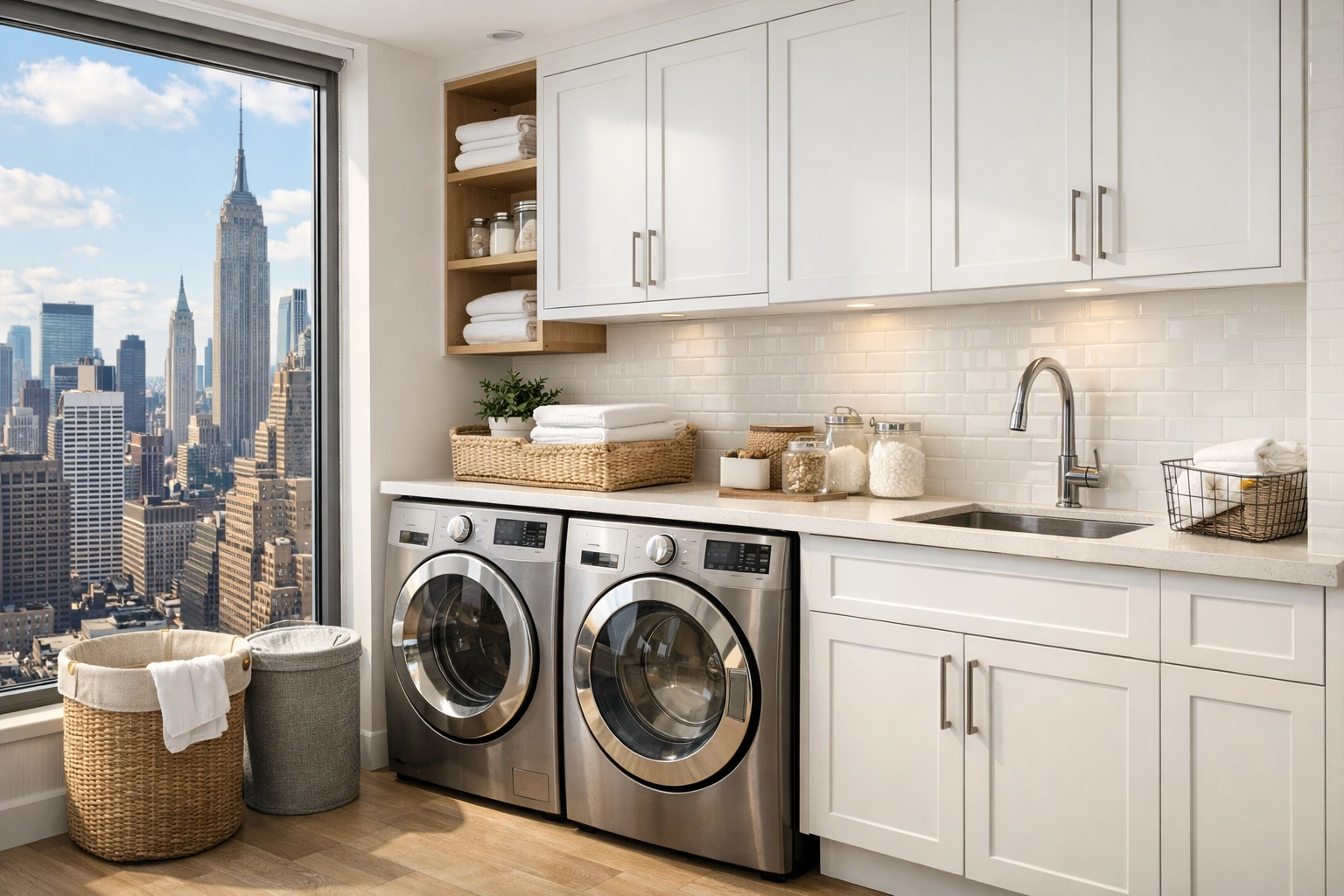
In the world of Manhattan real estate, an in-unit washer and dryer is often considered the ultimate luxury. Whether you are living in a historic pre-war co-op on the Upper West Side or a modern condo in Tribeca, the convenience of doing laundry at home cannot be overstated. However, many older apartments were never designed to accommodate modern appliances, leading many homeowners to consider moving or adding a laundry room during a major renovation.
As a premier Manhattan general contractor, Corniel Construction LLC understands that relocating a laundry room is far more complex than simply plugging in a machine. It involves a delicate balance of plumbing engineering, electrical capacity, and strict adherence to building policies. This guide explores the technical constraints, board requirements, and planning steps necessary to successfully move a laundry room in a NYC apartment.
Understanding Manhattan Building Restrictions for Laundry
Before picking out the latest high-tech stackable unit, the first step is to determine if your building even allows it. In New York City, particularly in co-op buildings, the rules regarding laundry installations are notoriously strict.
Many co-op boards have a "no washer/dryer" policy to prevent potential leaks and "suds pressure" issues in aging plumbing stacks. Even if your building allows them, they may have specific rules about where they can be placed. For instance, some buildings only allow laundry units in areas that were originally designed as "wet" spaces, such as kitchens or bathrooms, to minimize the risk of water damage to the "dry" living areas below.
When planning an NYC apartment renovation, we always recommend reviewing your building’s house rules and alteration agreement first. Some buildings may have "grandfathered" units that are allowed to keep existing machines while prohibiting new installations. Knowing these constraints early prevents costly design mistakes.
Plumbing and Drainage: The Technical Challenges
The primary hurdle in moving a laundry room is the plumbing. Unlike a kitchen sink or a bathroom vanity, a washing machine discharges a large volume of water very quickly. This requires specific drainage infrastructure that may not exist in the location where you want to move the laundry room.
Plumbing Stack Locations
Waste lines must connect to the building’s vertical plumbing stacks. If you move your laundry room too far from an existing stack, you may encounter issues with the drainage slope. Gravity-fed drain lines require a specific pitch (usually 1/4 inch per foot) to function correctly. If the distance is too great, you might have to raise the floor or build a platform for the machines, which can impact the aesthetics and accessibility of the room.
The "Wet-Over-Dry" Rule
Wet-over-dry restrictions are building-specific policies, not one universal Manhattan rule. Obtain the current alteration agreement and confirm whether kitchen, bathroom or laundry relocation is allowed above the rooms below. Review plumbing routes, waterproofing, structure and management requirements before finalizing a layout.

Caption: Exposed plumbing connections and drainage lines during a Manhattan apartment renovation.
Electrical and Venting Requirements for NYC Dryers
Relocating a laundry room also requires a significant electrical and ventilation strategy. Modern dryers have high power demands, and in many older Manhattan buildings, the existing electrical panels may not have the capacity to support them.
Electrical Upgrades
A standard electric dryer typically requires a dedicated 240-volt circuit. If your apartment’s electrical panel is at its limit, you may need an electrical upgrade. As a condo renovation Manhattan specialist, we often coordinate with building management to determine if the building's electrical backbone can handle the additional load.
Venting Solutions
Traditional vented dryers require an exhaust duct that leads to the outside. In most Manhattan apartments, creating a new hole in the building’s facade is strictly prohibited. Because of this, many homeowners opt for "ventless" dryers, such as condenser or heat pump models. These units collect moisture in a tray or pump it out through the drainage line, eliminating the need for an external vent. While they are more energy-efficient and easier to place, they do have different maintenance requirements and longer drying times.
The Board Approval Process for New Laundry Rooms
No significant renovation in NYC happens without board approval. For a laundry relocation, the board and the building’s reviewing architect will look closely at your plans to ensure the project doesn't endanger the building's infrastructure.
Typical requirements for approval include:
- Waterproofing: Most boards require the installation of a waterproof pan with an automatic shut-off valve under the washing machine to prevent flood damage.
- Vibration Isolation: To prevent noise complaints from neighbors, boards often mandate the use of vibration-dampening pads or specialized flooring under the units.
- Insurance and Licensing: Your Co-op renovation contractor NYC must provide proof of high-limit liability insurance and lead-safe certifications.
We partner and collaborate with licensed architects and engineers as needed to ensure that all drawings submitted to the board meet the technical standards required for a smooth approval process.

Caption: The demolition and framing phase of a laundry room relocation in a high-end NYC apartment.
Why Discovery Work is Essential for Laundry Relocation
One of the most critical phases of our process at Corniel Construction LLC is Pre-Construction Discovery. Before finalizing your architectural plans, it is often necessary to perform "probes", which involves opening small sections of walls or floors to locate the exact position of plumbing stacks, electrical lines, and structural beams.
In a Manhattan apartment, the "as-built" drawings are often decades old and inaccurate. By conducting discovery work early, we can identify if a planned laundry location is physically possible. This prevents the heartbreak of falling in love with a floor plan only to find out that a massive structural column or a main gas line is in the way.
Who This Page Is For
This guide is designed to help the following people navigate the complexities of laundry room renovations in NYC:
- Manhattan Homeowners: Those looking to upgrade their lifestyle by adding or relocating laundry facilities during a renovation.
- Architects and Designers: Professionals seeking technical insights into building constraints and plumbing requirements for their clients.
- Potential Buyers: Individuals evaluating an apartment's potential for a washer/dryer installation before they sign a contract.
- Property Managers: Those seeking to understand the standards and risks associated with laundry relocations in their buildings.
FAQ: Relocating Laundry in Manhattan
Can you install a washer/dryer in any Manhattan apartment?
No. Many co-op buildings have outright bans on in-unit washers and dryers due to the age of the plumbing system. Always check your building's house rules first.
Do co-op boards allow washer/dryer installations?
Some do, but they often require specific safety measures like automatic water shut-off valves, leak sensors, and waterproof pans. They also usually enforce the "wet-over-dry" rule.
Do dryers require venting in Manhattan apartments?
Most do not. Because of facade restrictions, "ventless" heat pump or condenser dryers are the standard for NYC apartment renovations.
Does installing laundry require permits?
Yes. In Manhattan, adding or moving plumbing and electrical lines for a laundry room requires permits from the NYC Department of Buildings (DOB).
Is Your Manhattan Renovation Budget Realistic?
Planning a laundry relocation involves more than just the cost of the appliances; it requires plumbing, electrical, and potentially structural work that must meet high building standards. To get an idea of the broader financial picture, you can review our Manhattan Renovation Cost Guide or our tips on Planning a Manhattan Apartment Renovation.
Planning a Manhattan renovation? Call 917-410-3132 to schedule a renovation feasibility review.