
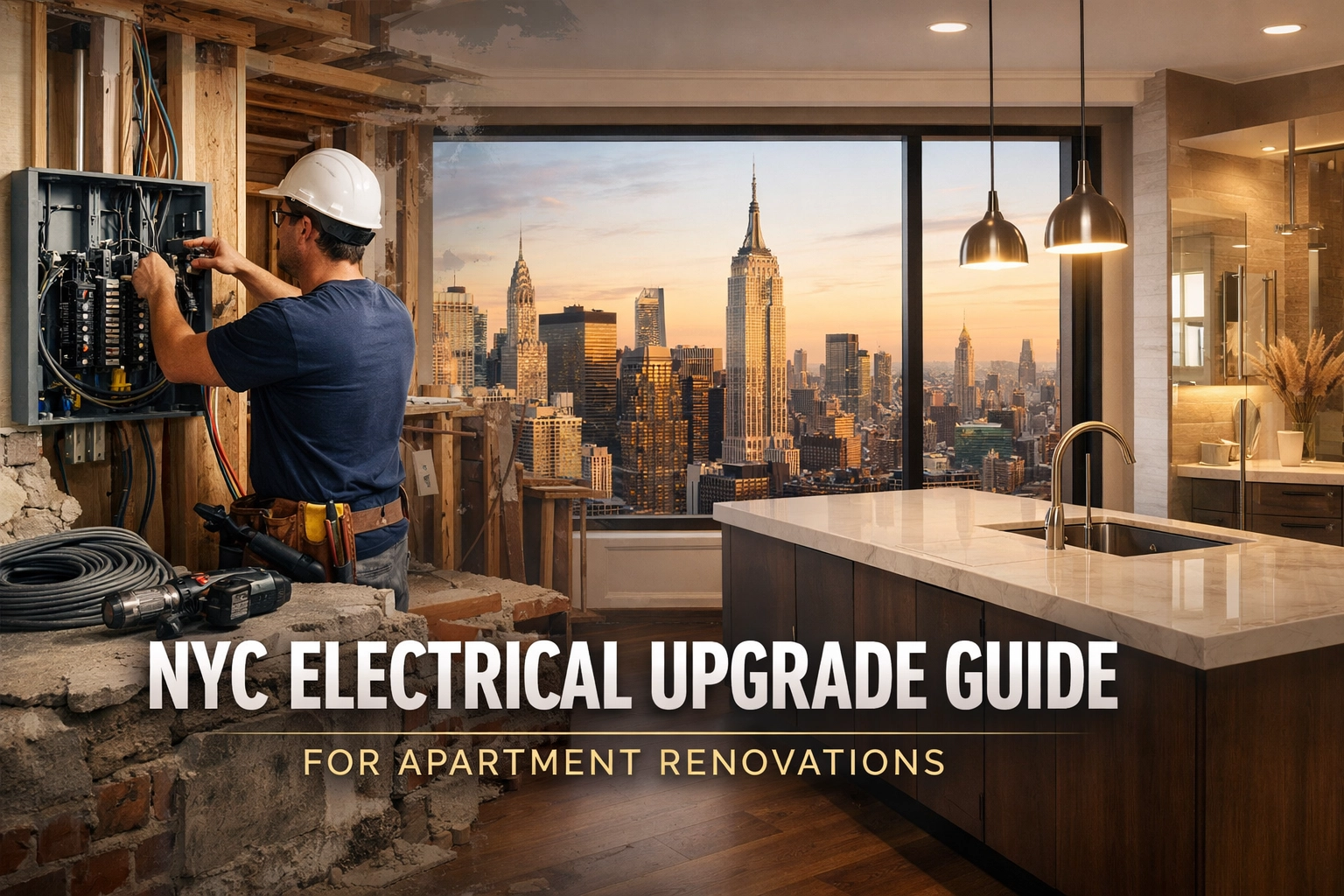
When you step into a classic pre-war apartment on the Upper West Side or a sprawling loft in Tribeca, the aesthetic charm is immediate. However, beneath the crown molding and herringbone floors lies a system that was likely never intended to power a 21st-century lifestyle. Modern luxury renovations often include high-induction cooktops, steam showers, multi-zone HVAC systems, and integrated smart home automation, all of which demand significant electrical infrastructure.
Upgrading your electrical system in Manhattan is not as simple as swapping out a few wires. It is a highly regulated process involving the Department of Buildings (DOB), building management, and a specialized “pit crew” of professionals. This guide breaks down everything you need to know about navigating electrical upgrades during your NYC apartment renovation.
Planning an apartment renovation with electrical upgrades? Tell us about the property, proposed appliances and renovation scope. Share existing plans if available so we can discuss construction coordination and next steps. Discuss Your Renovation or call 917-410-3132.
Who This Page Is For
- Manhattan Homeowners: Those planning a gut renovation or appliance upgrade who need to understand building limitations.
- Architects and Interior Designers: Professionals looking for a technical partner to execute complex electrical plans within NYC code.
- Prospective Buyers: Individuals considering a purchase in an older building who need to evaluate potential “hidden” infrastructure costs.
The Manhattan “Pit Crew”: Who Handles Your Electrical Upgrade?
A successful electrical upgrade requires more than just a contractor. It requires a coordinated effort between several key players. At Corniel Construction LLC, we position ourselves as a technical planning partner for our clients. We partner and collaborate with licensed architects and engineers as needed to ensure every technical drawing meets both your aesthetic goals and safety requirements.
- Licensed Master Electrician: In NYC, only a Licensed Master Electrician can pull electrical permits. They are responsible for the actual installation and ensuring the work meets the New York City Electrical Code.
- Architects and Engineers: For significant upgrades, especially those involving service increases or structural changes to accommodate new panels, architects or electrical engineers provide the necessary load calculations and schematics.
- Expeditors: An expeditor is the professional who manages DOB permit filings (such as Alt-2 or Alt-3 filings), tracks approvals, and coordinates documentation between architects/engineers and contractors. Expeditors do not design or build; they move filings and paperwork through the DOB process to ensure your project stays on schedule.
- Building Management: Your building’s “gatekeeper” who ensures your project complies with the specific House Rules and Alteration Agreement.

NYC Renovation Permits Explained
When it comes to electrical work in Manhattan, the “DIY” approach is non-existent. The NYC Department of Buildings (DOB) requires permits for almost any work beyond replacing a single light fixture or a defective switch.
If you are adding new outlets, installing recessed lighting throughout a living room, or upgrading your entire electrical panel, a permit is mandatory. Your Licensed Master Electrician will file an application with the DOB. For larger projects, this may be part of a broader Alt-2 filing managed by an expeditor. Failing to secure these permits can result in heavy fines, “Stop Work Orders,” and significant issues when you eventually try to sell your apartment.
For a deeper dive into the broader permit landscape, visit our Manhattan Apartment Renovation Guide.
Understanding Electrical Capacity and the Load Letter
The single biggest constraint in Manhattan renovations is “capacity.” Many older buildings were designed for a time when the most power-hungry device was a toaster. Today, a modern kitchen with a high-end range and a built-in espresso machine can easily exceed the total amperage allocated to an entire apartment.
Before any work begins, we recommend obtaining an Electrical Load Letter. This document, prepared by a licensed professional, compares your apartment’s current electrical capacity (often 40–60 amps in older buildings) against the proposed demands of your new appliances and systems. If your proposed design requires 100 or 200 amps but the building only provides 60, you will need to negotiate a “service upgrade” with the building, which can be a costly and complex endeavor.
Co-op Renovation Rules Manhattan
If you live in a Co-op or a Condo, the building’s Board of Directors has ultimate authority over what happens inside your walls. Electrical work is a primary concern for boards because faulty wiring in one unit can pose a fire risk to the entire building.
Co-op renovation rules Manhattan typically require:
- Alteration Agreements: A legal contract between you and the building outlining the scope of work, insurance requirements, and timelines.
- Building Engineer Review: Many buildings hire their own engineer to review your electrical plans at your expense.
- Insurance (COI): Your contractor and electrician must provide Certificates of Insurance that meet the building’s specific (and often very high) limits.
- Work Hours: Most buildings restrict noisy work (like channeling walls for new conduit) to 9:00 AM – 4:00 PM, Monday through Friday.
Understanding these NYC Co-op Renovation Rules is essential for avoiding delays and maintaining a good relationship with your neighbors.

2026 Code Compliance: AFCI, GFCI, and SPDs
As of 2026, NYC electrical codes have become more stringent to enhance resident safety. Any major renovation must bring the electrical system up to the current code, even if the rest of the apartment remains “as-is.”
- AFCI (Arc-Fault Circuit Interrupter): These are now required for nearly all branch circuits in habitable rooms (bedrooms, living rooms, etc.). They detect dangerous electrical arcs that could start a fire.
- GFCI (Ground-Fault Circuit Interrupter): Mandatory in “wet” areas like kitchens, bathrooms, and laundry rooms to prevent shock.
- Surge Protective Devices (SPDs): New code updates often require the installation of surge protection at the main service panel to protect the apartment’s electronics from external power surges.
- Hardwired Smoke/CO Detectors: Battery-operated units are no longer sufficient for renovations. These must be hardwired into the apartment’s electrical system and interconnected.
Condo Renovation Approval Process NYC
For condo owners, the process is slightly different than a co-op but no less rigorous. The condo renovation approval process NYC involves submitting your licensed electrician’s insurance and license, the DOB permit, and a detailed scope of work to the managing agent.
A common logistical challenge in condos, especially in high-rise buildings, is the coordination of the freight elevator. Most buildings require you to book the freight elevator weeks in advance for delivering heavy materials like bundles of conduit or new electrical panels. If your electrician arrives and the elevator is booked, you may lose a full day of labor.
Logistics: Protecting Your Investment
Electrical work can be messy. It often involves “trenching” or “channeling” into plaster or concrete walls to hide wires. This creates fine dust that can travel throughout an apartment.
At Corniel Construction LLC, we emphasize site protection. This includes:
- HEPA Filtration: Using air scrubbers to manage dust.
- Floor Protection: Using Ram Board or Masonite to protect expensive flooring from ladders and heavy toolboxes.
- Building Management Coordination: Ensuring the hallway is protected according to building standards to avoid fines.
If you are planning a larger project that includes more than just electrical work, you should consult our Manhattan Renovation Cost Guide to see how infrastructure upgrades impact your overall budget.

FAQ: NYC Electrical Upgrades
Do I need to rewire my entire apartment during a renovation?
If your wiring is “cloth-jacketed” or lacks a proper ground (common in pre-war buildings), most building boards and the NYC code will require a full rewire during a gut renovation to ensure safety and capacity.
How long does it take to get an electrical permit?
A standard electrical permit can often be issued relatively quickly (1–2 weeks) if the electrician is in good standing with the DOB. However, if the electrical work is part of a larger architectural filing (Alt-2), it can take several weeks for the full plan approval.
Can I move my electrical panel?
Yes, but it is a major undertaking. Moving a panel requires rerouting every circuit in the apartment. It also must be placed in a location that meets code requirements regarding “clearance” (you cannot hide a panel inside a small closet or behind a bathroom door).
What is the difference between a circuit breaker and a fuse box?
Fuses are found in very old systems and must be replaced when they “blow.” Circuit breakers are modern switches that can be reset. If you still have a fuse box, it is a high priority for replacement during any renovation.
Is Your Manhattan Renovation Budget Realistic?
Planning a Manhattan renovation? Text or call 917-410-3132 to schedule a renovation feasibility review.