
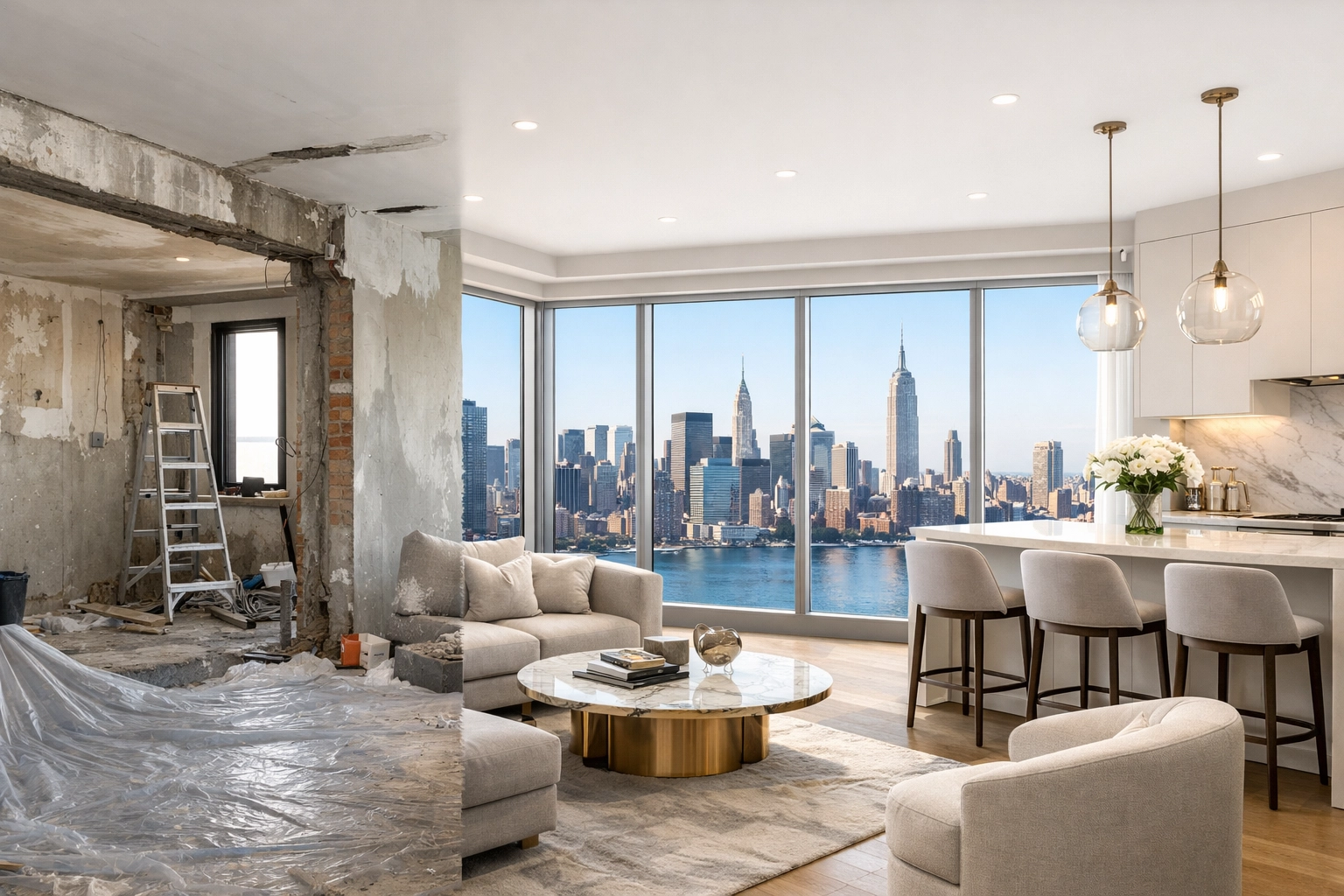
In the competitive landscape of Manhattan real estate, "estate condition" is a term that often signals both immense potential and significant complexity. These properties: frequently untouched for decades: offer a rare opportunity to own a "blank canvas" in prime neighborhoods like the Upper West Side, Tribeca, or Chelsea.
For many Manhattan buyers and owners, the situation is straightforward: the location is right, but the apartment is stuck in another era. Layouts are chopped up. Systems are at end-of-life. Building approvals can be slow. If you inherit an apartment or buy one “as-is,” you are often balancing carrying costs, board timelines, and the need to modernize fast: without triggering compliance issues or neighbor complaints.
However, transforming a home that has been frozen in time into a modern luxury residence requires more than just a fresh coat of paint.
At Corniel Construction LLC, we specialize in high-end full gut renovations in Manhattan, turning dilapidated estate condition units into contemporary masterpieces. This guide explores the unique challenges, regulatory requirements, and strategic planning necessary to navigate an estate renovation in New York City.
What Defines an Estate Condition Apartment?
In NYC, an "estate condition" listing typically refers to an apartment that has not been renovated in 30 to 50 years. Usually sold "as-is" by the heirs of the previous owner, these units often feature original layouts, outdated technologies, and significant wear and tear.
While the purchase price may be lower than a turn-key unit, the "hidden" costs are found behind the walls. From cloth-wrapped electrical wiring to corroded galvanized plumbing, the infrastructure of an estate condition property almost always requires a total overhaul to meet modern building codes and lifestyle standards.

Typical Challenges in Manhattan Buildings
Estate-condition renovations are rarely “just construction.” In Manhattan co-ops and condos, the building itself is part of the project. These are the issues that most often drive delays and change orders:
Board approvals and alteration agreements
Most co-ops (and many condos) require a full submission package before any work starts. That can include drawings, scope narratives, contractor insurance, license info, deposits, and a defined schedule. Miss one requirement and you can lose weeks waiting for the next review window.
DOB filings and permit coordination
Even when a building approves your plans, NYC Department of Buildings (DOB) filings may still be required for plumbing, electrical, structural, or layout work. Filing strategy matters. It impacts timeline, inspection sequencing, and what you can legally build. For a step-by-step view of how approvals typically work, review the NYC Apartment Renovation Process Guide.
Building rules that affect design decisions
Rules like “wet over dry,” noise limitations, allowed work hours, and restrictions on penetrations (slabs, beams, risers) can limit what you can move and where. That is why many owners pair an estate-condition renovation with a true full gut renovation in Manhattan plan: so infrastructure, layout, and compliance are solved together.
Logistics: elevators, material staging, and neighbor impact
Old service elevators, limited loading dock access, tight hallways, and strict debris removal procedures can add real cost and time. A clear logistics plan: protection, staging, daily cleanup, and delivery coordination: helps avoid building violations and work stoppages.
The Hidden Challenges: Plumbing, Electrical, and Infrastructure
When you strip away the wallpaper and dated carpeting of a pre-war estate, you encounter the reality of aging NYC infrastructure. These are the primary hurdles that require expert management:
Outdated Electrical Systems
Most estate apartments are still running on 40-amp or 60-amp electrical service, which is insufficient for modern living. Between high-end kitchen appliances, HVAC systems, and home automation, a modern Manhattan apartment typically requires at least 100-amp to 200-amp service. Upgrading this often involves running new lines from the building’s basement, a process that requires meticulous coordination with building management.
Corroded Plumbing and "Wet Over Dry" Rules
Wet-over-dry restrictions are building-specific policies, not one universal Manhattan rule. Obtain the current alteration agreement and confirm whether kitchen, bathroom or laundry relocation is allowed above the rooms below. Review plumbing routes, waterproofing, structure and management requirements before finalizing a layout.
Hazardous Materials
Given the age of these properties, the presence of asbestos (often found in floor tile adhesive or pipe insulation) and lead-based paint is common. Professional remediation is not just a safety requirement; it is a legal one. We ensure all hazardous materials are handled by certified specialists before the main construction begins.
co-op renovation rules Manhattan
If your estate condition apartment is located within a Manhattan co-op, the renovation process is governed by an Alteration Agreement. These documents are notoriously stringent. Co-op boards prioritize the integrity of the building’s systems and the comfort of other shareholders.
Common rules include:
- Work Hours: Typically restricted to 9:00 AM – 4:00 PM, Monday through Friday.
- Protection: Mandatory heavy-duty floor and elevator protection in all common areas.
- Insurance: Contractors must carry high-limit General Liability and Umbrella insurance policies.
- Security Deposits: Large refundable deposits held by the board to cover potential damage to common areas.
Understanding these rules is the first step in avoiding costly delays or work-stoppage orders.
condo renovation approval process NYC
While generally considered more lenient than co-ops, Manhattan condos still require a formal approval process. The board will review your architectural plans to ensure that structural changes do not impact the building's facade or shared mechanical systems. Even if the board approves quickly, you must still contend with the New York City Department of Buildings (DOB) for any structural, plumbing, or electrical work.

NYC renovation permits explained
In NYC, "rip and replace" projects (where fixtures stay in the same location) might only require minor work permits. However, an estate condition renovation is almost always a "Level 2" or "Level 3" alteration.
This means you will likely need:
- Confirm this work item, the current filing route, applicant, licensed-trade responsibilities and required sign-offs with the project professionals; do not prescribe a filing from a legacy label alone.
- Alt-Type 2: For multiple work types like plumbing, electrical, and structural changes that do not change the use of the space.
- LAA (Limited Alteration Application): For minor plumbing work.
Navigating the DOB filing system is complex. To ensure compliance and safety, we partner and collaborate with licensed architects and engineers as needed to secure the necessary filings and sign-offs.
how much does kitchen remodeling cost in Manhattan
The kitchen is often the centerpiece of an estate renovation. In an estate condition property, the kitchen is usually a small, galley-style room that homeowners want to open up or expand.
Kitchen pricing depends on cabinetry, appliances, stone, layout, utility changes, existing conditions, access, protection and finish selections. Pricing is confirmed after scope review. Review the Manhattan kitchen renovation service.
how much does bathroom remodeling cost NYC
Estate condition bathrooms often require more than just new tile. Because the underlying subfloor and plumbing are usually 50+ years old, a full gut is required.
Bathroom pricing depends on layout, plumbing, waterproofing, ventilation, substrate condition, fixtures, finishes, protection and building logistics. Pricing is confirmed after scope review. Review the Manhattan bathroom renovation service.

how long does a gut renovation take NYC
Timeline is the most frequent question we receive. For a full estate condition renovation in Manhattan, the timeline generally breaks down as follows:
- Design & Planning: Schedule after reviewing scope, preceding approvals, procurement, access and required inspections.
- Board & DOB Approvals: Schedule after reviewing scope, preceding approvals, procurement, access and required inspections.
- Demolition & Remediation: Schedule after reviewing scope, preceding approvals, procurement, access and required inspections.
- Rough-ins: Schedule after reviewing scope, preceding approvals, procurement, access and required inspections.
- Finishes & Millwork: Schedule after reviewing scope, preceding approvals, procurement, access and required inspections.
Duration depends on design completion, building review, applicable filings, approved work hours, procurement, access, existing conditions and the defined construction scope. Establish the sequence and dates for this property with the project team.
Strategic Internal Linking and Resource Guide
To help you plan your project, we recommend exploring our detailed case studies and service pages:
- View our Tribeca Loft Case Study to see how we handle large-scale conversions.
- Browse our Interiors Portfolio for inspiration on high-end finishes.
- Consult our NYC Apartment Renovation Process Guide for a step-by-step breakdown of board interactions.
The Corniel Construction Advantage
Renovating an estate condition apartment in Manhattan is a high-stakes endeavor. It requires a contractor who understands the nuances of pre-war construction, the intricacies of NYC building codes, and the diplomacy required to work with co-op and condo boards.
At Corniel Construction LLC, we provide comprehensive project management. We handle the logistical heavy lifting: from protecting the building’s elevators to coordinating with your building’s "super": so you can focus on the design of your new home. Our team is dedicated to transparency, quality craftsmanship, and maintaining the highest professional standards in every Manhattan neighborhood we serve.
Manhattan Neighborhoods We Serve
Corniel Construction provides renovation services throughout Manhattan including Tribeca, Upper East Side, Upper West Side, SoHo, Chelsea, West Village, and the Financial District. Whether you are renovating a pre-war co-op or a modern condo, your project benefits from a clear plan, tight logistics, and board/DOB coordination from day one.
Ready to Transform Your Manhattan Property?
Don't let the "as-is" condition of a potential home intimidate you. With the right team, an estate condition apartment can become the luxury residence you’ve always envisioned.
Contact us today to discuss your vision and receive a professional assessment of your renovation project.
Corniel Construction LLC
Phone: 917-410-3132
Serving Manhattan, NY and North Bergen, NJ.