
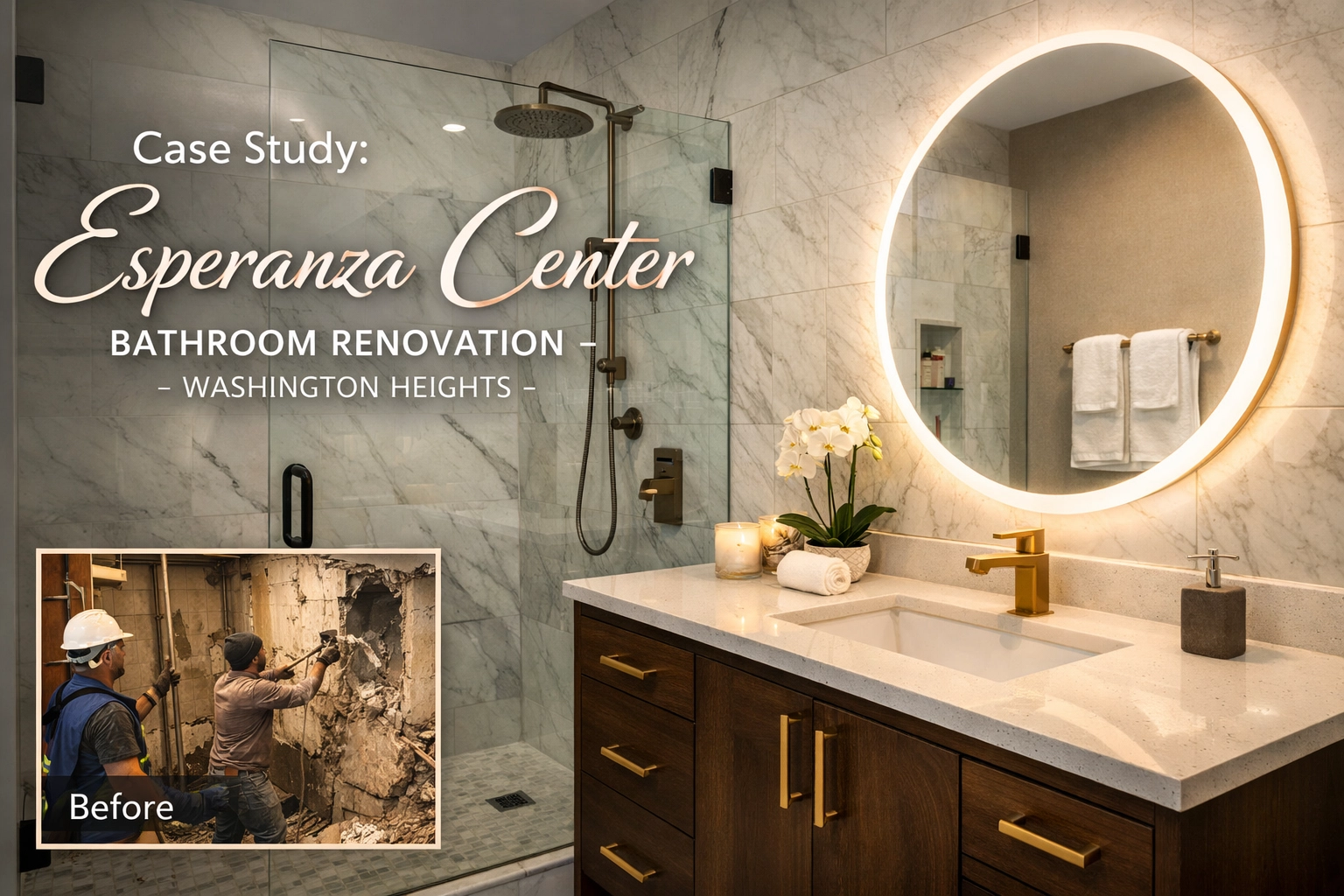
Planning example — not a documented completed case. This resource addresses community facility bathroom access and operations. No specific client, completed work, project price, duration or approval is established here. Use it to prepare a scope conversation and compare it with the conditions of your own property.
Images on this page are visual references. They are not verified photographs documenting Corniel’s execution of the scenario below.

Define the facility users and operational needs
Discuss the expected users, staffing, cleaning routines and times when facilities must be available. Record particular accessibility and assistance needs with the facility team and responsible designer. A restroom scope should support the people using it rather than beginning only with finish choices. This page is a prospective community-facility planning example; it does not establish a client commission, identify a client population as evidence or assert that Corniel completed work there.

Have accessibility requirements evaluated for the scope
Ask the responsible design professionals to identify the applicable accessibility requirements and coordinate them with actual measured conditions. Review doors, approach, fixture locations, accessories and user circulation as a complete layout. Product marketing and a generic clearance diagram do not establish project compliance. Use the accepted design and applicable review records to define installation checks. This example provides no universal dimensional rule or claim that a contractor is certified as ADA compliant.

Compare materials with the cleaning routine
Obtain supplier guidance on cleaning products, maintenance, replacement parts and installation conditions for the proposed surfaces, partitions and fixtures. Consider the actual frequency and nature of use when comparing options. Review how joints, edges and service access affect maintenance. No selected tile, grout or plumbing material should be described as preventing all slips, leaks or bacterial growth. Document the products and the facility maintenance expectations before procurement.

Evaluate phasing before promising continued operation
Map temporary closures, alternative facilities, access routes and separation between construction and occupied areas. Discuss those arrangements with the facility team and the responsible professionals. Determine the conditions under which occupancy can continue rather than guaranteeing that the building never needs to close. Record required reviews and operational decisions. This planning example replaces an unsupported completed-project story without asserting a verified price, timetable, compliance outcome or improvement in a named organization services.
how much does bathroom remodeling cost NYC?
Obtain quotations against a written scope and selected products. Ask each proposal to identify labor, materials, access and protection arrangements, work by others, inclusions and exclusions. Keep allowances and unresolved existing conditions visible so they can be reviewed when more information is available. Compare proposed substitutions on scope and installation requirements, not only total price. A working budget should identify the decisions needed to release it and how a scope change will be approved. This example establishes no standard Manhattan price, per-square-foot rate, insurance limit or claimed saving.
How long does an institutional bathroom renovation take in NYC?
Base the working sequence on design releases, the actual review requirements, supplier information, access arrangements and trade coordination. Record which assumptions have been confirmed and which remain open. Where inspections or utility coordination apply, identify the responsible party and the relationship to later work. Agree on how a discovery or late selection changes the sequence. Do not treat a generic number of weeks or months as a verified schedule. The project team should maintain a current plan tied to the accepted scope and available information.
Keep a record that can support a genuine case later
Retain the accepted scope, relevant drawings, recorded changes, applicable review records and photographs of the work actually performed. A finished image cannot establish concealed installation, project cost, client satisfaction or agency acceptance by itself. Separate design references from project evidence and record the context of any photographed work. If a complete project record becomes available, it can support a separately verified case. Until then, this page remains a prospective planning example and provides no documentary claim of a completed Corniel Construction job.
Compare this example with a verified project
Return to the documented work and renovation planning examples to distinguish project evidence from design references. Review the approval-route planning resource and the budget planning worksheet for the corresponding decisions. For a scope discussion about your property, Schedule Your Consultation or call 917-410-3132.
Prepare for the scope review
Bring measured information, relevant property documents and your priorities for community facility bathroom access and operations. Note which choices are essential and which can change. Use the review to assign unresolved questions to the appropriate professional and agree on the information needed before accepting the proposed scope.
Review the NYC renovation permit planning resource alongside the public-review decisions for your facility. Ask the responsible professionals to determine the applicable filings for the actual institutional scope.