
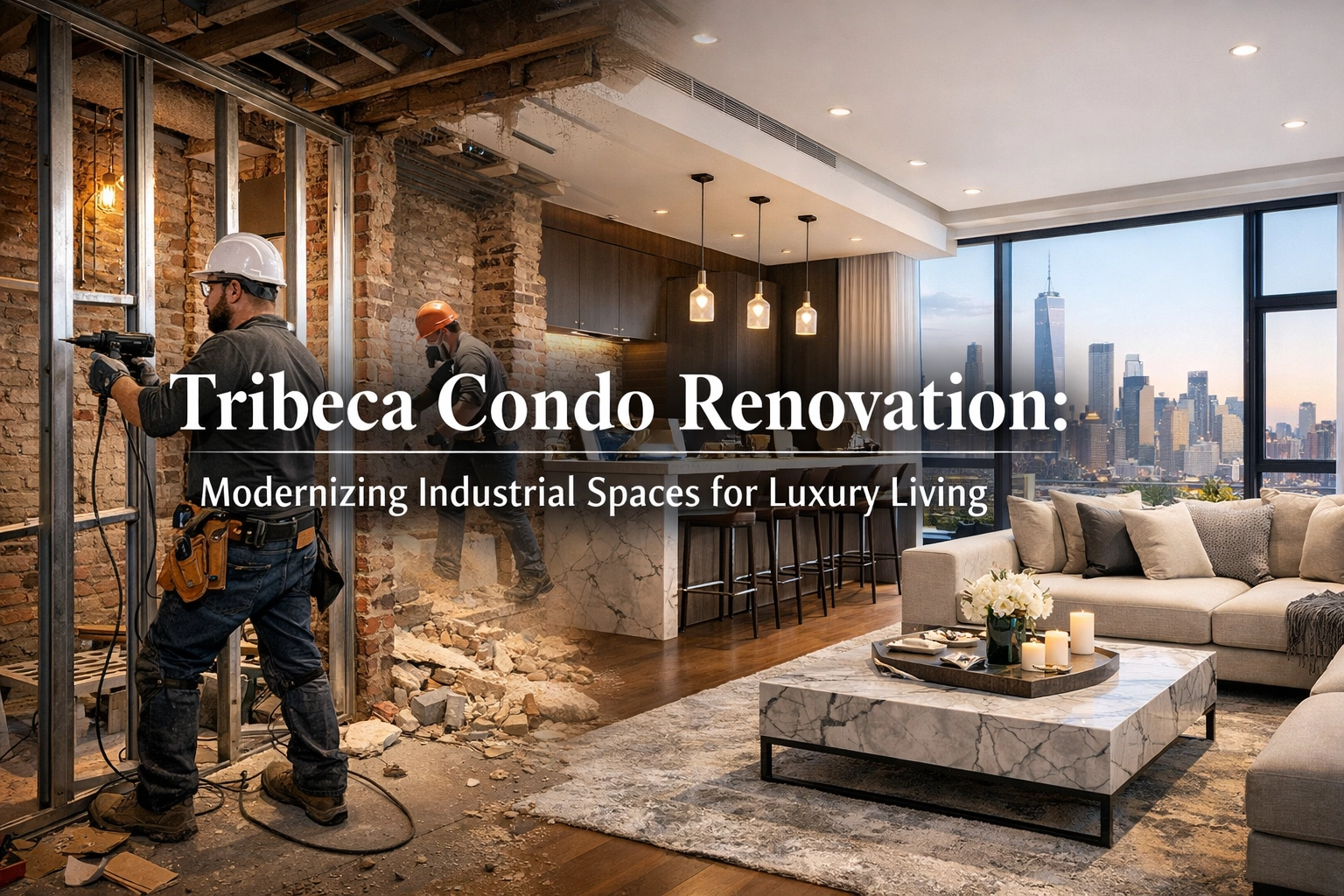
Tribeca condo renovations transform historic industrial lofts into high-end residences by blending original architectural details like exposed brick and cast-iron columns with modern luxury finishes. Success in this neighborhood requires navigating strict building boards and Department of Buildings (DOB) regulations while preserving the district's unique manufacturing heritage.
Who This Page Is For
- Tribeca Homeowners: Those looking to modernize an aging loft or convert a commercial-style space into a luxury sanctuary.
- Prospective Buyers: Individuals considering a purchase in iconic buildings like 67 Vestry or 55 North Moore who need to understand the renovation scope.
- Architects and Designers: Design professionals looking for a technical construction partner to execute complex structural and aesthetic plans.
- Property Managers: Those seeking a contractor who understands the nuances of Tribeca’s landmarked buildings and high-rise luxury towers.
The Soul of Tribeca: Industrial Roots Meet Modern Luxury
Tribeca (the Triangle Below Canal Street) is world-renowned for its cobblestone streets and massive industrial warehouses. These buildings, once the hub of NYC’s spice, textile, and dry goods trades, now house some of the most sought-after real estate in Manhattan.
Renovating a condo here isn’t like a standard apartment refresh. Whether you are dealing with a historic cast-iron loft or a unit in a newer luxury high-rise, the goal is usually the same: celebrating the "bones" of the building while integrating 21st-century comfort. This means exposing original brick, restoring steel columns, and highlighting massive timber beams, all while installing chef-grade kitchens and spa-like bathrooms.
At Corniel Construction LLC, we specialize in these high-stakes transformations. We understand that in Tribeca, you aren’t just renovating a home; you’re preserving a piece of New York City history.

How Much Does Kitchen Remodeling Cost in Manhattan?
In Tribeca, the kitchen is the heart of the open-concept loft. Because these spaces are often oversized compared to typical Manhattan apartments, the costs reflect the scale and the quality of materials required.
Kitchen pricing depends on cabinetry, appliances, stone, layout, utility changes, existing conditions, access, protection and finish selections. Pricing is confirmed after scope review. Review the Manhattan kitchen renovation service.
Why the wide range? It comes down to the "luxury" factor. Sub-Zero and Wolf appliances are the standard here. Custom cabinetry designed to fit around original structural columns adds complexity. Furthermore, if you are relocating plumbing to create a massive island, a staple of Manhattan kitchen renovation, you will face higher labor costs for trenching and pipe rerouting.
How Much Does Bathroom Remodeling Cost NYC?
For a luxury Tribeca condo, a bathroom isn't just a utility; it's a retreat. Modernizing a bathroom in an industrial space often involves overcoming challenges with old floor joists and plumbing stacks.
Bathroom pricing depends on layout, plumbing, waterproofing, ventilation, substrate condition, fixtures, finishes, protection and building logistics. Pricing is confirmed after scope review. Review the Manhattan bathroom renovation service.
Wet-over-dry restrictions are building-specific policies, not one universal Manhattan rule. Obtain the current alteration agreement and confirm whether kitchen, bathroom or laundry relocation is allowed above the rooms below. Review plumbing routes, waterproofing, structure and management requirements before finalizing a layout.
Condo Renovation Approval Process NYC
The "board approval" phase is often the most intimidating part of a Tribeca renovation. Condo boards in this neighborhood are protective of their buildings' integrity and their residents' peace.
The process generally follows these steps:
- Alteration Agreement: Reviewing your building’s specific rules on work hours, insurance, and protection of common areas.
- Architectural Review: The board’s designated architect will review your plans to ensure they don't compromise the building's structure or systems.
- Insurance and Bonding: Ensuring your contractor (like Corniel Construction LLC) carries the massive umbrella policies required for luxury buildings.
- Security Deposits: Most Tribeca buildings require a significant "damage deposit" before work begins.
Navigating the Manhattan condo renovation guide is essential to avoid delays that can stall a project for months.

NYC Renovation Permits Explained
If your renovation involves moving walls, changing plumbing, or updating electrical systems (which most Tribeca lofts do), you will need permits from the NYC Department of Buildings (DOB).
- Confirm this work item, the current filing route, applicant, licensed-trade responsibilities and required sign-offs with the project professionals; do not prescribe a filing from a legacy label alone.
- Confirm this work item, the current filing route, applicant, licensed-trade responsibilities and required sign-offs with the project professionals; do not prescribe a filing from a legacy label alone.
- For a designated landmark property or a building in a historic district, LPC review can apply to exterior work, interior work requiring a DOB permit, work affecting the exterior, and designated interior landmarks. Certain qualifying maintenance and emergency repairs are exempt. Confirm the property designation and proposed work with the design team using LPC permit guidance; visibility from the street alone does not determine the requirement.
We highly recommend hiring an expeditor. An expeditor is the professional who manages DOB permit filings, tracks approvals, and coordinates documentation between architects/engineers and contractors. They do not design or build; they move filings and paperwork through the DOB process to keep your project on schedule. For more on this, read our NYC renovation permits guide.
How Long Does a Gut Renovation Take NYC?
Duration depends on design completion, building review, applicable filings, approved work hours, procurement, access, existing conditions and the defined construction scope. Establish the sequence and dates for this property with the project team.
- Planning and Approvals: Schedule after reviewing scope, preceding approvals, procurement, access and required inspections.
- Demolition and Rough-In: Schedule after reviewing scope, preceding approvals, procurement, access and required inspections.
- Finishing and Millwork: Schedule after reviewing scope, preceding approvals, procurement, access and required inspections.
Timelines can be extended by the complexity of working in historic buildings where you might find unexpected structural issues once the walls are opened. Early feasibility evaluation is a core part of how we work, helping to identify building limitations before they become expensive mid-project surprises.
Schedule Your Consultation
Ready to start your Tribeca transformation?
Schedule Your Consultation
Design Challenges: Light and Scale
One of the biggest hurdles in Tribeca loft renovations is the "deep floor plate." Many industrial buildings are long and narrow with windows only at the front and back.
To bring light into the center of the apartment, we often utilize:
- Frosted Glass Partitions: Providing privacy for bedrooms without blocking light.
- Skylights: Possible in many penthouse units.
- Open Concept Layouts: Minimizing interior walls to let the massive Tribeca windows do their job.

Is Your Manhattan Renovation Budget Realistic?
Before you sign a contract, you need to know if your vision aligns with the reality of the NYC market. Tribeca is one of the most expensive zip codes in the world, and construction costs reflect the logistical hurdles of working there, parking for work vans, strict elevator hours, and the high cost of premium materials.
Using a Manhattan renovation budget estimator is a great first step to setting expectations.
Planning a Manhattan renovation? Call 917-410-3132 to discuss your project.
FAQ: Tribeca Condo Renovations
Can I remove the columns in my Tribeca loft?
Almost certainly not. Those cast-iron or timber columns are usually structural. However, they can be stripped, refinished, and integrated as a stunning architectural feature of your new design.
What are "wet-over-dry" rules?
Most Tribeca boards prohibit placing a "wet" room (kitchen or bath) over a neighbor's "dry" room (bedroom or living room) to prevent catastrophic water damage in case of a leak. This significantly impacts where you can relocate your plumbing.
Do I need a landmarks permit for interior work?
For a designated landmark property or a building in a historic district, LPC review can apply to exterior work, interior work requiring a DOB permit, work affecting the exterior, and designated interior landmarks. Certain qualifying maintenance and emergency repairs are exempt. Confirm the property designation and proposed work with the design team using LPC permit guidance; visibility from the street alone does not determine the requirement.
How do I handle noise complaints during renovation?
Most buildings have "quiet hours" and specific times when heavy demolition is allowed. We follow a strict site management protocol to ensure we remain good neighbors to your fellow residents while keeping the project moving.
Why do I need an expeditor?
The NYC DOB system is notoriously complex. An expeditor knows the specific paperwork and people needed to push your permits through, saving you weeks or even months of bureaucratic headache.
Corniel Construction LLC
General Contractor Manhattan | Apartment Renovation Specialist
+1 917-410-3132
Schedule Your Consultation