

Choosing the right countertop is one of the most important decisions during a kitchen or bathroom remodel. Your countertop sets the tone for the entire space, influencing not just the look but also the functionality of your kitchen or bath. Granite and quartz are two of the most widely used materials among the best options available today.
Both surfaces are beautiful, strong, and capable of increasing your home’s value. They vary, nonetheless, in terms of upkeep, longevity, cost, and beauty. If you’re trying to decide between granite and quartz, this guide will walk you through everything you need to know—so you can make the best investment for your home.
Granite vs Quartz Countertop Comparison

| Feature | Granite | Quartz |
| Material | 100% natural stone | Engineered stone (quartz + resins) |
| Appearance | Unique, one-of-a-kind patterns | Uniform colors & designs |
| Durability | Strong, may chip if hit hard | Very durable, chip & stain resistant |
| Maintenance | Requires sealing 1–2 times/year | Virtually maintenance-free |
| Heat Resistance | Withstands high heat | Sensitive to extreme heat |
| Cost | $40–$100 per sq. ft. installed | $50–$120 per sq. ft. installed |
| Resale Value | Timeless, appeals to natural stone lovers | Increasingly popular for modern buyers |
Contact Us Today for Custom Kitchen Remodeling in New York.
What Is Granite?
Granite is a 100% natural stone that is quarried, cut into slabs, polished, and then fabricated into countertops. Because it comes straight from the earth, every piece of granite has unique veining, colors, and mineral patterns.
Granite countertops are especially popular among homeowners who value individuality—no two slabs are alike, which means your kitchen or bathroom will always look one-of-a-kind.
Highlights of granite countertops:
- Natural stone with unique patterns
- Highly heat resistant
- Adds timeless character to kitchens and bathrooms
- Requires sealing to prevent stains
What Is Quartz?
Quartz countertops are not mined directly from the earth like granite. Instead, they are engineered stone surfaces made from natural quartz crystals combined with resins and pigments. The result is a strong, non-porous material that mimics natural stone but with added benefits like easy maintenance and consistency in color.
Because quartz is man-made, it offers endless design options—from patterns that resemble marble and granite to bold, uniform colors that fit modern styles.
Highlights of quartz countertops:
- Engineered with resins and pigments
- Non-porous and stain-resistant
- Easy to maintain—no sealing required
- Wide variety of colors and finishes
Pros and Cons of Granite
Pros:
- Unique, natural appearance
- Resistant to heat and scratches
- Long-lasting with proper care
- Adds value for buyers who love natural stone
Cons:
- Porous surface can absorb stains if unsealed
- Needs periodic resealing
- Can chip if subjected to heavy impact
- Color choices depend on what’s available in nature
Pros and Cons of Quartz
Pros:
- Non-porous, so no sealing is needed
- Wide range of colors and designs
- More uniform appearance than granite
- Highly resistant to stains and bacteria
- Requires little maintenance
Cons:
- Can discolor or crack with direct, extreme heat
- Often more expensive than granite
- Less “natural” look, especially in uniform patterns
Detailed Comparison
Appearance
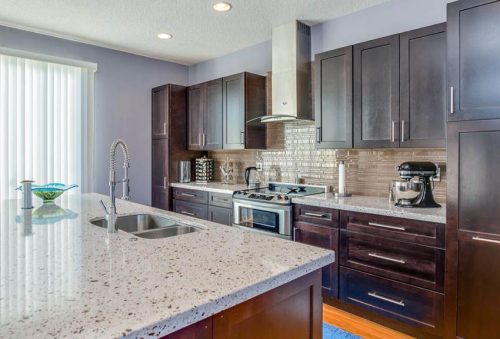
Granite is beloved for its natural beauty and uniqueness. Each slab is one-of-a-kind, making it perfect for homeowners who want something special. Quartz, on the other hand, offers a wide variety of styles, including those that look like marble or granite, but with more consistent designs. If you want uniformity, quartz is the way to go.
Durability
Both granite and quartz are durable, but quartz edges out granite because it is non-porous and more resistant to stains and chips. Granite is still very strong but requires sealing to prevent liquids from seeping in.
Maintenance
Granite requires sealing about once a year, depending on usage. Quartz requires almost no maintenance—just simple cleaning with soap and water. For busy households, quartz often feels more convenient.
Heat Resistance
Hot pans can be placed directly on granite without risk because it can tolerate direct heat. Quartz is more sensitive; hot pans can damage or discolor it, so trivets are recommended.
Cost
The cost of granite or quartz depends on the style, color, and thickness you choose. Granite starts at around $40 per square foot installed, while quartz usually begins closer to $50 per square foot. Rare granite slabs and high-end quartz designs can both climb to $120+ per square foot. Call us for affordable residential remodeling services in NY.
Which One Should You Choose?
The decision between granite and quartz comes down to your lifestyle, design preferences, and budget.
- Choose Granite if:
- You value natural beauty and unique designs.
- You cook often and need heat resistance.
- You don’t mind resealing once a year.
- Choose Quartz if:
- You want a low-maintenance surface.
- You prefer consistent patterns and modern styles.
- You’re looking for excellent stain resistance.
Conclusion
When comparing granite vs quartz countertops, the best choice depends on your needs. Granite is a timeless, natural option that brings unique beauty to every kitchen or bathroom. Quartz, on the other hand, offers unmatched convenience, modern design consistency, and minimal upkeep.
At Corniel Construction, we help homeowners choose the perfect countertop material for their lifestyle, budget, and design vision. Whether you’re drawn to the natural elegance of granite or the sleek practicality of quartz, our team ensures professional installation and long-lasting results.
👉 Ready to transform your kitchen or bathroom? Contact Corniel Construction today for expert guidance and a free estimate.
Frequently Asked Question
Q1: Which is more popular in 2025—granite or quartz?
Quartz continues to grow in popularity, especially for modern homes, but granite remains a timeless classic that never goes out of style.
Q2: Do granite countertops add more value to a home than quartz?
Both add resale value. Buyers who love natural stone often prefer granite, while those who want low maintenance tend to lean toward quartz.
Q3: Is quartz safer for families with kids?
Yes, quartz is non-porous and resistant to bacteria, making it a hygienic choice for kitchens with kids.
Q4: Can I put a hot pot on quartz?
It’s not recommended. Quartz can be damaged by extreme heat, so use trivets or hot pads. Granite, on the other hand, can usually handle hot cookware.
Q5: Which is better for outdoor kitchens—granite or quartz?
Granite is better for outdoor use because it withstands sunlight and heat. Quartz can discolor in direct sunlight over time.