
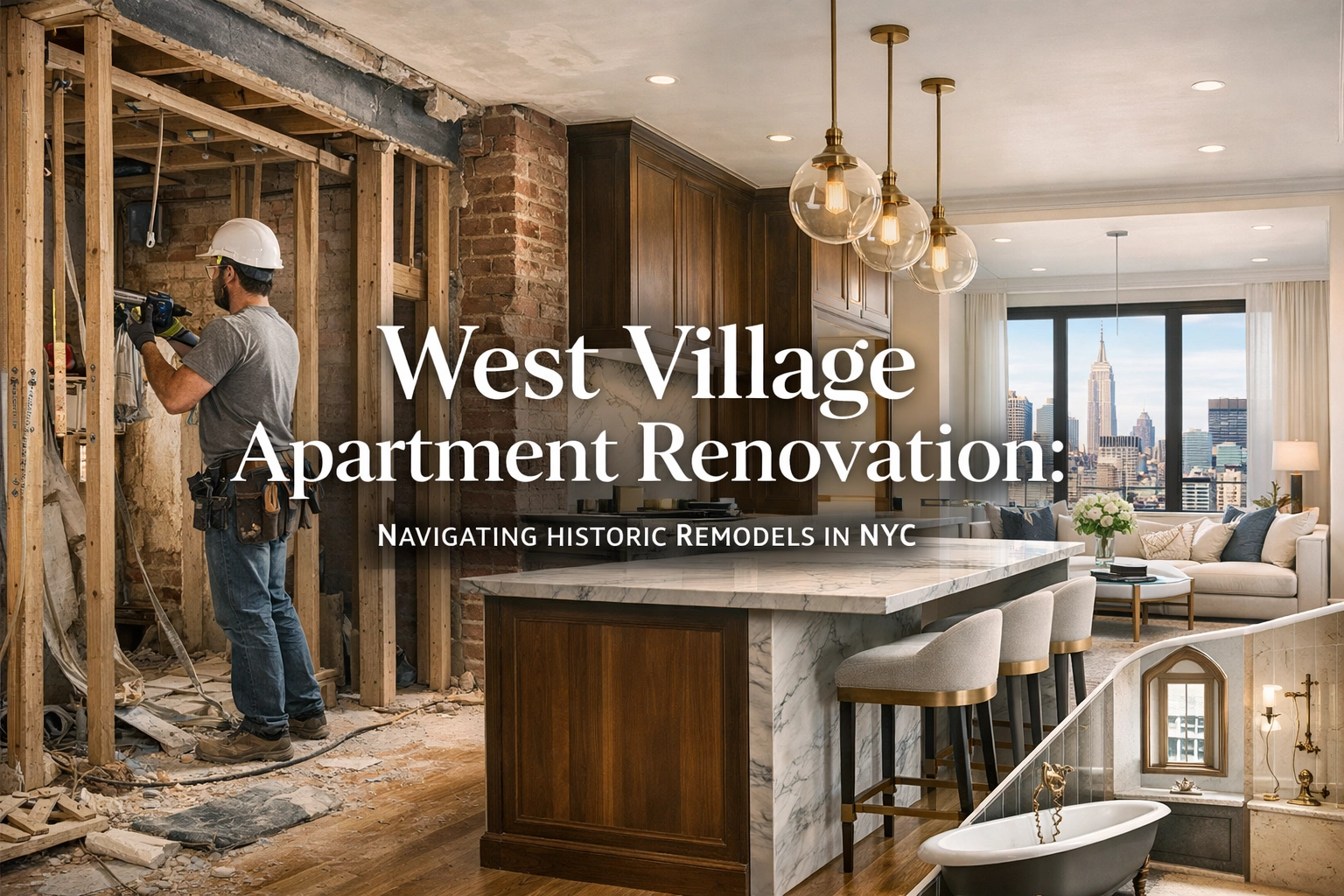
Renovating an apartment in the West Village is a dream for many, but the reality involves navigating a complex web of historic preservation rules, tight logistics, and strict building boards. Whether you are modernizing a pre-war co-op or restoring a 19th-century brownstone, success in this neighborhood requires a deep understanding of Landmarks Preservation Commission (LPC) guidelines and the physical constraints of Manhattan’s narrowest streets.
Who This Page Is For
This guide is designed for:
- West Village Homeowners: Looking to upgrade kitchens, bathrooms, or perform full gut renovations while respecting historic architecture.
- Architects and Designers: Seeking a technical planning partner and general contractor to execute high-end designs within the constraints of NYC building codes.
- Prospective Buyers: Evaluating a property in the West Village and needing a feasibility review to understand what is structurally and legally possible.
The Unique Challenges of West Village Renovations
The West Village is famous for its charm: cobblestone streets, angled intersections, and historic facades. However, those same features create significant hurdles for a renovation. Unlike a modern condo in Midtown, a West Village project often involves buildings that are over a century old.
Landmarks and Historic Brownstones
A large portion of the West Village is located within the Greenwich Village Historic District. This means any work affecting the exterior of the building must be approved by the Landmarks Preservation Commission (LPC). While interior work that doesn't affect the exterior usually doesn't require LPC oversight, any changes to windows, front doors, or facade masonry involve a rigorous approval process. For significant alterations, you may need a Certificate of Appropriateness (CoA), which involves public hearings and community board reviews.
Narrow Streets and Logistical Hurdles
Logistics are often the "silent budget killer" in the West Village. Many streets are too narrow for large dumpsters or delivery trucks. This requires a "staged" approach where materials are delivered in smaller increments, and debris is removed via specialized "pack-and-go" services. We emphasize early feasibility evaluation to identify these building limitations before the first hammer swings.

how much does kitchen remodeling cost in Manhattan
When people ask how much does kitchen remodeling cost in Manhattan, the answer in the West Village typically starts at a higher baseline due to the age of the infrastructure. For a standard luxury kitchen renovation in a West Village apartment, costs generally range from $40,000 to $80,000+, depending on the level of custom cabinetry and high-end appliances.
In historic buildings, we often discover outdated plumbing or electrical systems behind the walls. Upgrading these to meet modern NYC building codes is a necessity, not an option. If you are planning a high-end transformation, our NYC luxury kitchen renovation guide provides a deeper dive into the specific rules and design trends for 2026.
how much does bathroom remodeling cost NYC
For those wondering how much does bathroom remodeling cost NYC, specifically in pre-war West Village buildings, you should budget between $25,000 and $50,000. The complexity often lies in the "Wet over Dry" rule: a common NYC co-op policy that prevents you from moving a bathroom (a "wet" zone) over a neighbor’s bedroom or living room (a "dry" zone).
Because West Village bathrooms are often smaller than those in newer constructions, maximizing every square inch with custom vanities and intelligent lighting is key. For a detailed breakdown of costs for luxury and standard upgrades, check out our Manhattan bathroom remodeling budget guide.

co-op renovation rules Manhattan
Understanding co-op renovation rules Manhattan is essential because these boards often have stricter requirements than the city itself. In the West Village, many co-ops are located in older, smaller buildings where noise and dust travel easily.
Standard co-op rules often include:
- Limited Work Hours: Usually 9:00 AM to 4:00 PM, Monday through Friday only.
- Alteration Agreements: A legal contract between you and the board outlining your responsibilities.
- Insurance Minimums: Contractors must carry significant liability insurance to protect the building.
- Security Deposits: Large refundable deposits held by the board during construction.
We partner and collaborate with licensed architects and engineers as needed to ensure all plans meet both the building’s specific alteration agreement and NYC code requirements.
condo renovation approval process NYC
The condo renovation approval process NYC is generally slightly more lenient than co-ops, but it still requires formal board review. In West Village condos, the board will primarily focus on structural integrity, plumbing changes, and insurance. Even if your condo board is laid-back, the NYC Department of Buildings (DOB) is not. You will still need proper permits for most work. To learn more about navigating these rules, read our Manhattan condo renovation guide.

NYC renovation permits explained
When it comes to NYC renovation permits explained, there are several types you might encounter. Most West Village apartment renovations fall under Alt-CO (formerly Alt-2), which is for work that doesn't change the building's certificate of occupancy but involves structural, plumbing, or electrical changes.
To manage this process, we recommend working with an expeditor. An expeditor is the professional who manages DOB permit filings, tracks approvals, and coordinates documentation between architects and contractors. They do not design or build; they move paperwork through the DOB system to ensure your project stays legal and on schedule. For more information, see our NYC renovation permits guide.
how long does a gut renovation take NYC
A common question is how long does a gut renovation take NYC. For a typical West Village apartment, you should expect the process to take 6 to 10 months. This includes:
- Design and Planning: 2–3 months.
- Board & DOB Approvals: 2–4 months (longer if LPC is involved).
- Construction: 3–5 months.
Timelines can be extended by long-lead items like custom Italian cabinetry or imported marble. Our role as your technical planning partner is to identify these potential delays early in the process. For more details on timelines, refer to our complete NYC gut renovation guide.

Need an expert eye on your project?
Schedule Your Consultation
Case Study: West Village Brownstone Modernization
- Neighborhood: West Village (Greenwich Village Historic District)
- Building Type: 19th-century Brownstone
- Scope: Gut renovation of the parlor floor, including a luxury kitchen and master bath.
- Constraints/Approvals: The project required LPC approval for window replacements on the front facade. The narrow street meant that all debris removal had to be scheduled for early morning "live-load" pickups.
- Final Outcome: We successfully blended historic crown molding and original fireplace mantels with a sleek, modern kitchen featuring Sub-Zero and Wolf appliances. The project was completed within the board's 6-month work window.
FAQ: West Village Renovations
Do I need a permit to just replace my kitchen cabinets?
In NYC, if you are not moving gas lines, electrical outlets, or plumbing fixtures, you may not need a formal DOB permit for cabinetry replacement. However, most West Village co-op and condo boards still require an internal permit or "minor work" approval.
What is the "Wet over Dry" rule?
This is a building policy common in Manhattan that prohibits owners from placing a bathroom or kitchen over another unit's bedroom or living room to minimize the risk of water damage to high-value living areas.
How do I handle trash removal in the West Village?
Since dumpsters are rarely allowed on narrow West Village streets, we use "pack-and-go" trucks. Debris is bagged inside the apartment, carried down (often via narrow stairs or padded elevators), and loaded directly onto a truck that departs immediately.
Does Corniel Construction provide architectural drawings?
We are a general contracting firm. We partner and collaborate with licensed architects and engineers as needed to provide a full design-build experience for our clients.
Is Your Manhattan Renovation Budget Realistic?
Planning a renovation in the West Village requires a balance of aesthetic vision and technical reality. Before you fall in love with a design, make sure your budget accounts for the unique logistical and regulatory costs of this neighborhood. You can use our Manhattan Renovation Budget Estimator to get a clearer picture of potential costs.
Corniel Construction LLC serves New York and New Jersey, with a primary focus on Manhattan and North Bergen. We specialize in navigating the complexities of high-end apartment transformations.
Planning a Manhattan renovation? Call or text 347-567-1018 to discuss your project.