
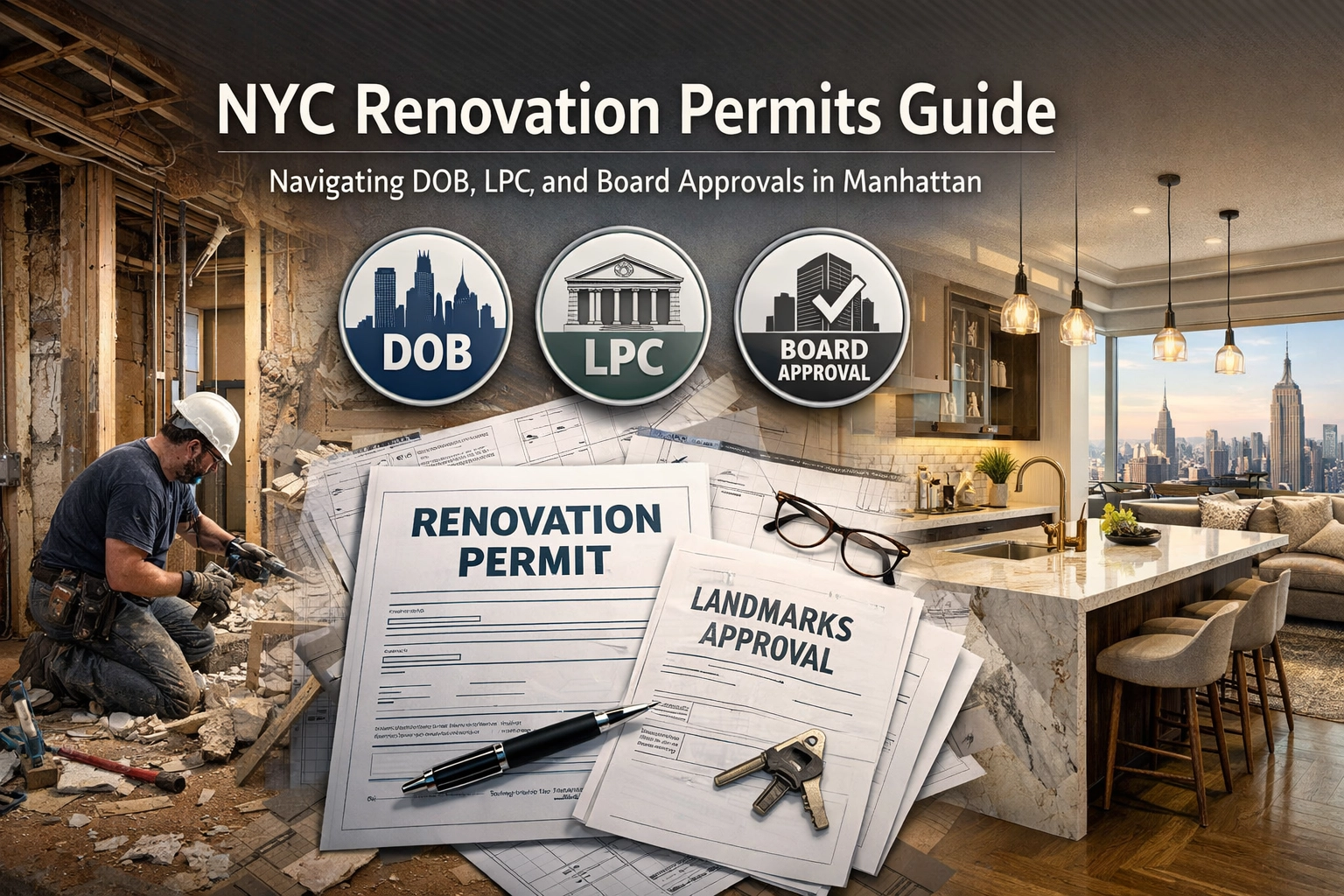
NYC renovation permits can involve DOB filings, LPC review (for landmarked properties), and co-op/condo board approvals. Most structural, plumbing, and electrical work in Manhattan needs permits and sign-offs. Planning early helps you avoid stop-work orders, failed inspections, and delays that can derail your renovation schedule.
Who This Page Is For
This guide is designed for Manhattan homeowners planning a remodel, buyers performing due diligence on a potential property, and architects or designers seeking a technical partner. Whether you are tackling a high-end gut renovation or a specific kitchen upgrade, understanding the regulatory landscape is the first step toward a successful project.
NYC renovation permits explained
In the world of New York City real estate, "permits" is an umbrella term that covers several different layers of approval. At the city level, the Department of Buildings (DOB) oversees safety and structural integrity. If your building is historic, the Landmark Preservation Commission (LPC) regulates aesthetic changes. Locally, your Co-op or Condo board enforces the building’s Alteration Agreement.
Hiring an experienced Manhattan renovation contractor for permits, costs, and condo board approval is essential because the liability of unpermitted work falls squarely on the homeowner. We partner and collaborate with licensed architects and engineers as needed to ensure every technical drawing meets the stringent NYC building codes.

Alt text: A licensed contractor reviewing blueprints for a Manhattan apartment renovation to ensure DOB compliance.
When Do You Need a Permit? (Scope of Work)
Not every hammer swing requires a city permit, but most meaningful improvements do.
Minor Work (No Permit Required)
Cosmetic updates generally fall under "minor work." This includes:
- Painting and wallpapering.
- Installing new flooring (though boards often require underlayment approvals).
- Replacing kitchen cabinets in the same location.
- Replacing existing plumbing fixtures without moving the "rough-in" locations.
Major Work (Permits Required)
If you are changing the footprint or the "guts" of the home, you will need an Alteration Type 2 (Alt-2) or Type 3 (Alt-3) permit. Requirements apply to:
- Moving or removing walls (structural or non-structural).
- Adding or relocating plumbing fixtures (sinks, toilets, showers).
- Upgrading electrical panels or adding new circuits.
- Changing the use of a space (e.g., turning a closet into a powder room).
For comprehensive planning, refer to our Manhattan renovation cost guide for apartment remodel pricing and budgeting to see how permit fees and professional filings impact your overall investment.
The Players: Architects, Expeditors, and Contractors
A successful permit application is a team effort. Because NYC code is dense, you cannot simply walk into the DOB and file paperwork yourself.
The Architect/Engineer: They create the technical drawings and "seal" them, taking legal responsibility for the design's safety.
The Expeditor: In Manhattan, we frequently work with expeditors. An expeditor is the professional who manages DOB permit filings (e.g., Alt-1, Alt-2, Alt-3), tracks approvals, and coordinates documentation between architects/engineers and contractors. It is important to note that expeditors do not design or build; they move filings and paperwork through the DOB process to avoid administrative delays.
The Contractor: We execute the work according to the approved plans and call for the necessary inspections (plumbing, electrical, and structural) to close out the permits.

Alt text: Interior view of a Manhattan gut renovation during the roughing-in phase with visible electrical and plumbing work.
Landmark Preservation Commission (LPC) and Historic Districts
If your home is in a designated historic district, such as the Upper West Side, Greenwich Village, or Chelsea, you face an additional layer of NYC renovation permit requirements. The LPC must approve any work that affects the exterior of the building or significant interior features in landmarked properties.
Even something as simple as replacing windows or installing an AC through-wall sleeve requires an LPC permit. Working with a contractor who understands these aesthetic constraints prevents costly "Stop Work Orders" from the city.
Co-op and Condo Board Approvals
In Manhattan, your building board often acts as a stricter regulator than the city itself. Before the DOB even looks at your plans, your board must sign off on the "Alteration Agreement."
Boards are particularly concerned with:
- The NYC Wet Over Dry Rule: This rule generally prevents homeowners from placing a "wet" zone (like a bathroom or kitchen) over a "dry" zone (like a bedroom or living room) in the apartment below. You can read more about navigating this in our NYC Wet Over Dry Rule guide for Manhattan co-op and condo renovations.
- Insurance and Licensing: Your contractor must provide specific insurance limits (often $5M or higher in luxury buildings).
- Work Hours: Most buildings restrict noisy work to between 9:00 AM and 4:30 PM, Monday through Friday.
Schedule a Manhattan Renovation Consultation
The NYC Renovation Permit Timeline
How long does the process take? In Manhattan, patience is a requirement.
- Design and Filing (4–6 weeks): The architect prepares plans and the expeditor submits them to the DOB.
- Board Review (2–8 weeks): Depending on the building's management and the complexity of the project.
- DOB Approval (2–4 weeks): If using "Professional Certification," this can be faster, but it carries more audit risk.
- Permit Issuance: Once the board and DOB approve, the permit is "pulled" and work can begin.
If you are planning a specific room update, our Manhattan kitchen renovation cost guide for pricing and planning provides more detail on how these timelines shift for trade-specific projects.

Alt text: Digital rendering of a modern Manhattan kitchen renovation alongside architectural permit drawings.
Costs of Permitting and Compliance
Permits are not just a flat fee. You should budget for:
- DOB Filing Fees: Usually based on a percentage of the estimated construction cost.
- Professional Fees: For the architect, engineer, and expeditor.
- Asbestos Testing: Required for almost all NYC buildings before a permit is issued.
- Security Deposits: Many Co-op/Condo boards require a "renovation deposit" (often $5,000–$10,000) held in escrow to cover potential damage to common areas.
For those renovating an entire building, the Manhattan townhouse renovation guide for gut renovation timeline, permits, and costs offers a deeper dive into the specific structural permits required for multi-story properties.
Common Challenges and Inspections
The process doesn't end when the permit is issued. To "close out" a project and receive a Letter of Completion, the city must conduct inspections.
- Plumbing/Electrical Roughing: Inspections occur while the walls are still open.
- Final Inspection: Once the project is finished, inspectors verify the work matches the filed plans.
- Sign-off: Without a final sign-off, you may face issues when trying to sell or refinance your apartment in the future.
Is Your Manhattan Renovation Budget Realistic?
Permitting and compliance in Manhattan can account for 10% to 15% of your total project budget when you factor in professional fees and building requirements. Ignoring these steps is never an option in a city where building management and the DOB keep a close watch.
Planning a Manhattan renovation? Call or text 347-567-1018 to discuss your project.
Schedule a Renovation Feasibility Review
FAQ: NYC Renovation Permits
Do I need a permit to replace my bathroom tiles?
No, cosmetic changes like tiling, painting, or replacing a vanity in the same location typically do not require a DOB permit, though your building board may still require an abbreviated approval.
What is an Alteration Agreement?
It is a legal contract between you and your building's board that outlines the rules, insurance requirements, and timelines for your renovation.
What happens if I renovate without a permit?
The DOB can issue a "Stop Work Order" and heavy fines. Additionally, the building can shut down your project, and you will likely face significant hurdles when you try to sell the property.
How much does an expeditor cost?
Expeditor fees in Manhattan typically range from $1,500 to $5,000 depending on the complexity of the filings and the number of trades involved.
Can I move my kitchen to another room?
In most Manhattan Co-ops and Condos, this is very difficult due to the "Wet Over Dry" rule and the location of existing plumbing stacks. A feasibility review is essential before planning such a move.